If you own or manage a home built before the 1960s, there is a great chance you have actually handled glass screw-in fuses a minimum of once. More recent homes almost never ever utilize them. Rather, they depend on breaker-style distribution inside a metal cabinet that the majority of people call the electrical panel. The 2 systems do the same job at a high level, yet they differ in how they protect circuits, how they age, and what they permit you to do securely. Those distinctions matter when you remodel cooking areas, add EV battery chargers, or fix annoyance trips.
I have actually upgraded dozens of fuse systems to contemporary breaker panels in houses old enough to have knob-and-tube in the attic and fabric wrap in the basement. Fuse boxes can still be safe under the right conditions, but they impose limits that are tough to live with in a world of hair clothes dryers, microwaves, and heat pumps. Comprehending the mechanics and the compromise assists you make clear choices about danger, expense, and timing.
What a circuit box really does
A circuit box is a circulation point where incoming service power divides into branch circuits. Each circuit travels through a fuse that burns open when current surpasses its rated worth. The majority of property circuit box utilize either screw-in plug merges that thread into Edison-style sockets or cartridge merges for larger loads. You will often see a main pull-out block with two cartridge merges that work as the service disconnect, then a row of smaller sized plug fuses for lighting and receptacles. The whole assembly may be rated for 60 amps or 100 amps, with 60-amp service common in prewar bungalows.
The physics is easy. A thin strip of metal inside the fuse heats up as present increases. If the present is expensive for too long, the strip melts, the circuit opens, and the danger ends. Fuses work exceptionally well at stopping overloads, and they do it rapidly. That speed is one factor commercial systems still utilize fuses for some high-fault applications. Residentially, the disadvantage is that a blown fuse is done for the day. You need to change it with a new among the correct rating. That sounds basic till you take a look at a drawer of mismatched fuses next to a dark basement stair and wonder which one wound up doubling for the cooking area this time.
The greatest security issue I discover with fuse boxes is not the innovation, it is individuals. Oversizing takes place when a property owner swaps a blown 15-amp fuse for a 20-amp or 30-amp version so it will "stop blowing." The fuse stops blowing since the circuit defense no longer matches the wire size, so the copper in the walls becomes the fuse by overheating. You might not see smoke up until the receptacle behind the sofa discolors. Fuse boxes can be safe if everybody stays with the right sizes and the circuits are well balanced properly. Truth does not constantly cooperate.
How a modern-day electrical panel works
An electrical panel, also called a breaker panel or load center, does the very same task: it divides incoming service into branch circuits, each secured separately. Instead of changeable merges, it utilizes resettable breaker, spring-loaded switches that journey when existing surpasses a calibrated limit or, in some cases, when heat and time accumulate beyond safe margins. After you clear the fault, you return the deal with to ON and the circuit is back.
A basic property electrical panel includes a main breaker, which works as the service detach, and rows of branch breakers. The bus bars inside the panel disperse power to the breakers. Neutral and equipment grounding conductors terminate by themselves bars, with particular separation rules depending upon whether the panel is the service equipment or a downstream subpanel. Typical main service rankings are 100, 150, 200, and 225 amps in single-family homes, with 200 amps the existing default for a lot of new building because it comfortably supports today's loads with room to grow.
The biggest useful difference from a homeowner's point of view is the breaker's reset ability. You do not require extra parts to restore power. The second difference, which matters more to safety, is the layered security you can build into a panel. Modern breakers can combine thermal-magnetic overcurrent defense with ground-fault protection (GFCI), arc-fault security (AFCI), or both in a dual-function breaker. That means the panel can detect unsafe arc signatures from damaged cables in a bedroom or ground faults in a wet basement, then clear the fault in milliseconds. Fuse boxes, as installed initially, do not supply that kind of protection unless you include separate devices farther downstream.
Where the terms get mixed up
People typically utilize "fuse box" generically to indicate any metal cabinet with a door and numerous circuits. I have walked into basements where a homeowner pointed to a modern-day breaker panel and called it a circuit box since that is what their moms and dads called it. The distinction is simple to identify if you open the door. If you see rows of deals with that can be flipped back on, that is an electrical panel with breakers. If you see screw-in round fittings or rectangle-shaped pullouts that accept cartridges and no resettable handles, that is a true fuse box.
Another source of confusion is the existence of fused disconnects near big devices. Heatpump, a/c, and some tankless water heaters need a local disconnect within sight. Many of these are fused despite the fact that the home's primary distribution is a breaker panel. This is not a contradiction. The panel and the merged detach serve various functions. The detach supplies extra short-circuit protection and a method to securely service the equipment.
Safety, speed, and what trips first
Both fuses and breakers offer overcurrent protection, however they do it with various signatures. A properly rated fuse clears very quickly on high fault currents. In many cases, particularly with old electrical wiring that has lower fault present readily available, the speed difference will disappoint up in practice. But on modern services with more available fault present, fuses can be exceptionally fast, which is why energies and commercial sites still rely on them in selective places.
Breakers have improved considerably. Thermal-magnetic units collaborate well with upstream devices and work reliably in domestic settings. They also pair with arc-fault and ground-fault electronic devices that save lives. The earliest AFCI breakers from twenty years back were infamous for nuisance trips when vacuum cleaners or treadmills launched. Today's designs handle common motor inrush much better, yet they still recognize harmful series and parallel arc signatures. When I update a panel in a bedroom-heavy home, I often see a few trips throughout the very first month as the system satisfies your home. After a little cable replacement and a couple of tightened up terminations, the trips vanish, which informs you the device did its job by requiring a correction.
One note on selectivity. On multi-level security, you desire the gadget closest to the fault to journey initially. Circuit box in some cases chain fuses in manner ins which make selective coordination unforeseeable, specifically if somebody has blended time-delay and fast-acting fuses. Breaker panels, configured appropriately, generally journey at the branch breaker and leave the primary intact unless the fault is genuinely severe.
Capacity, convenience, and the way we live now
A 60-amp fused service may have served a small home when lighting was incandescent and plugs were few. It is tight for a modern lifestyle. Cooking areas alone can consume 40 to 60 amps when running varieties, microwaves, and counter top devices. Include a clothing dryer, a heatpump, and a vehicle charger, and the mathematics becomes uncomfortable fast.
Most electrical panels installed today begin at 100 amps and frequently land at 200. Even if you do not need 200 amps on the first day, a 200-amp panel purchases headroom for an induction range, a jacuzzi, or an EV. It likewise purchases breaker spaces. I often change a congested 20-space panel with a 40-space panel fed by the exact same 200-amp service just to remove double taps and move multiwire circuits onto correct handle-tied breakers. That organizational step alone lowers call-backs.
Fuse boxes are generally tight. They may have four to 8 branch circuits, often serving numerous rooms per fuse. Property owners turn to add-on fuse holders or subpanels that appear like vines growing from the initial box. That sort of expansion typically flexes rules around neutrals and grounds, and it makes troubleshooting harder. When I see add-on boxes with missing covers, mismatched merges, and shared neutrals, I start talking about a thorough upgrade licensed professionals for panel replacement rather than piecemeal repairs.
Code implications and insurance reality
Codes evolve to resolve recognized threats. Modern code needs GFCI security in kitchens, restrooms, garages, basements, outdoor receptacles, and laundry areas. It needs AFCI protection in most living locations. It requires tamper-resistant outlets in homes with kids. It requires particular bonding of metal piping and separation of neutrals and grounds in subpanels. None of that is impossible with a circuit box, however it becomes uncomfortable and pricey. You end up installing GFCI receptacles at every counter top and arguing over where the arc-fault protection sits.
Breaker panels streamline compliance. You can drop in dual-function breakers on the circuits that need both GFCI and AFCI security and stop. When the authority having jurisdiction examines the task, they can see the protection at the source. Inspectors know what they are taking a look at, and the labeling is clear. The net effect is faster approval and fewer surprises on final.
Insurers pay attention also. I have actually had customers whose insurance coverage providers flagged old circuit box throughout policy renewals. Some providers merely ask for an electrical assessment. Others require replacement if the service is only 60 amps or if the devices consists of known issue brands. You can press back if the system is sound and loads are low, but the trend is clear. Upgrading the electrical panel minimizes friction with loan providers and insurance companies, which can matter when you sell.
Known problem children: Federal Pacific, Zinsco, and friends
The world of electrical equipment has a couple of brand names that raise eyebrows. Federal Pacific Electric (FPE) Stab-Lok and some Zinsco panels have actually recorded problems with breakers stopping working to journey under overload, bus bars overheating, and breakers loosening up on the bus. If you own a home with among these panels, replacing it is not practically modernization. It is about eliminating recognized problems. Inspectors often note these panels as safety concerns. Buyers, and their insurance companies, check out those reports carefully.
Fuse boxes do not have a single brand-level villain the way breaker panels do. Their risks tend to be cumulative and behavioral, like oversizing merges, adding cheater adapters that let you screw a 20-amp fuse into a 15-amp socket, or abandoning covers. I have discovered fuse panels with cents jammed behind the fuse to keep the lights on. That technique turns a protective gadget into a strong copper slug. If a house has endured that kind of improvisation, presume the circuitry downstream requirements inspection.
Grounding and bonding frequently drive the decision
Many fuse-era homes lack modern-day grounding. You might see a single corroded clamp on a water pipe with no supplemental ground rod, or you might see no bonding at all to gas piping or metal water lines. Some still depend on the metal conduit as the only grounding course, which can be acceptable if the channel is constant and in great shape, but that is a big if after 70 years.
An electrical panel upgrade is a natural minute to fix grounding and bonding. We install brand-new grounding electrode conductors to rods and water piping as needed, bond the gas line if suitable, isolate neutrals from premises in subpanels, and label whatever plainly. The difference in fault-clearing efficiency before and after strong grounding can be night and day. An excellent ground offers breakers a low-impedance course so they trip quickly on faults rather of letting mystery voltages drift around a metal home appliance frame.
Real-world nuisances that mean the ideal answer
Patterns repeat throughout homes:
- Lights dim when the microwave starts, yet no breaker trips. That typically signifies a greatly loaded shared circuit in a fuse system or a little service. A panel upgrade with dedicated kitchen circuits repairs the symptom and the cause. Plug fuses blow only during the night when multiple area heating systems run. That might be the system doing its job, however it likewise points to way of life modifications outgrowing a little fuse box. A modern electrical panel with more circuits minimizes the temptation to oversize fuses. An ended up basement has a patchwork of add-on fuse holders feeding receptacles and a sump pump. When the pump stalls and a fuse gets too hot, you get water on the floor. A breaker with devoted GFCI defense is not simply hassle-free, it safeguards the motor and your basement. An EV battery charger keeps tripping a 30-amp 240-volt fuse. Even if the circuit wire supports 40 amps, the old box has no free capacity and the primary is 60 amps. Every recharge dangers blacking out the house. At that point, you are fixing the wrong issue by swapping fuses. The service and the circulation both require attention.
Cost, scope, and what an upgrade actually involves
Clients typically ask for a ballpark expense. The range depends on service size, grounding corrections, meter socket condition, area of the panel, and regional permitting requirements. In numerous markets, replacing a circuit box with a 200-amp electrical panel, including brand-new service mast or service lateral connections, 2 ground rods, bonding, arc-fault and ground-fault breakers where required, and license, lands somewhere in between a couple of thousand dollars and the low five figures. If the energy requires to upgrade the drop or the service lateral, there may be extra coordination and downtime. If the service entryway conductors go through old plaster and buried channel, labor goes up.
I constantly scope the job personally. We check loads with a clamp meter, review significant appliances, examine the panel place for working clearance, and check grounding. We photograph the meter base and validate with the energy what they own versus what you own. Then we stage the upgrade on a day when the home can endure a power blackout of 4 to eight hours. If the house needs circuits divided out, we include time to rewire or to run brand-new homeruns for kitchen area small-appliance circuits, laundry, and bathrooms.
One housekeeping information matters more than individuals think: labeling. Precise labels help you when something fails at 11 p.m., and they assist every contractor who comes after. On an upgrade, we chase after circuits to validate destinations and compose clear, human-readable labels. "East bedroom outlets" is more useful than "Bed 2." In a fuse box, labels are often missing, faded, or incorrect. That alone can burn an hour on a simple service call.
When a circuit box can stay
Not every fuse box should go tomorrow. If you own a little cabin with a handful of circuits, low yearly use, and no plans for much heavier loads, a well-maintained circuit box can serve silently for many years. The secret is discipline. Keep the correct fuses on hand and do not oversize them. Replace any brittle or cloth-insulated branch circuitry that shows heat wear. Make sure the grounding electrode system is intact, and bond metal piping effectively. If you plan to sell, divulge the existence of a fuse box to avoid surprises, and be gotten ready for a buyer to ask for an allowance for an upgrade.
I have actually also kept fuse boxes in location temporarily when a bigger restoration is on the horizon. There is no sense spending for a panel relocation two times if walls will be open in six months. In those cases, we stabilize the existing system, replace certainly jeopardized conductors, and often add a little breaker subpanel downstream for a brand-new circuit or two while leaving the primary fused service undamaged. Consider that as a bridge, not a destination.
When an electrical panel is the smarter move
Any of the following tends to press the decision towards a modern-day panel:
- You plan major load additions like an induction range, jacuzzi, heat pump, or EV charging. These need devoted circuits and often a larger service. The existing service is 60 amps or the circuit box is out of capability, with circuits doubled up and temperature levels running warm at the panel. You need widespread AFCI or GFCI defense to satisfy code in a remodel. Doing that at the panel with contemporary breakers is cleaner and normally cheaper. The box reveals indications of previous abuse: oversize merges, cheater adapters, missing out on covers, or heat damage around fuse holders. That history erodes rely on what you can not see behind the walls. Insurance or assessment reports call out the system as a danger or obstacle to closing a sale.
When we update, we do not just change Breaker box replacement a metal can. We aim to provide your home a tidy electrical backbone that supports future modifications without hacks or workarounds. The distinction is visible the first time a breaker journeys since a toaster and microwave shared a counter. You reset it, move one appliance to a devoted small-appliance circuit, and carry on. There is no late-night run for merges, no uncertainty about wire size, and no doubt about whether the fault cleared as designed.
A note on panel functions worth paying for
All panels are not the very same. A couple of functions make life easier:
- Sufficient spaces. Pick a panel with more breaker spaces than you need now. Growth area prevents double taps and creative splicing down the road. Copper bus or top quality plated bus. Great bus material resists rust and heat damage, particularly in damp basements. Plug-on neutral rails. These streamline AFCI and GFCI breaker setup, minimize pigtail mess, and improve organization. Clear labeling and a door that closes easily. Little information matter. A tidy panel motivates tidy work later. Manufacturer consistency. Sticking with a mainstream brand makes replacement breakers easy to discover years from now.
A well-chosen electrical panel coupled with thoughtful circuit layout can reduce annoyance trips and make troubleshooting straightforward.
What to anticipate during the upgrade day
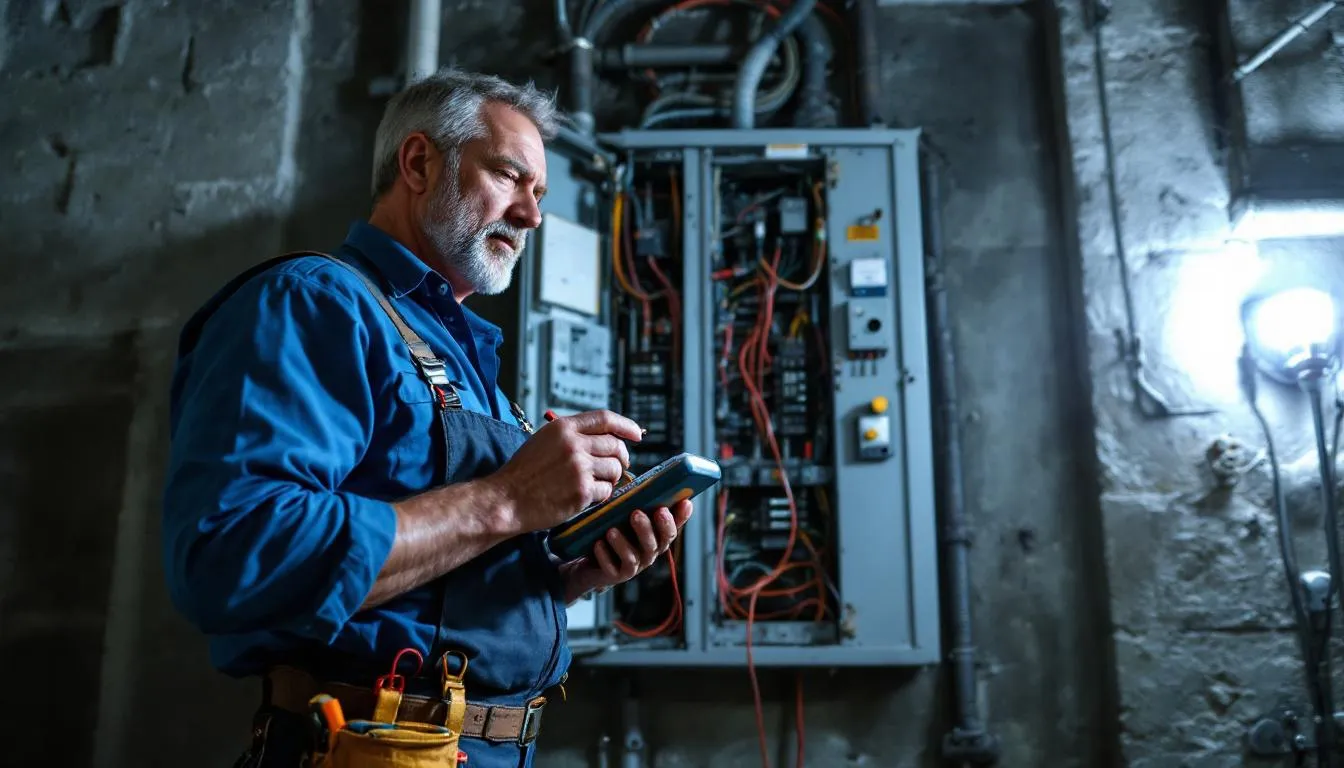
On the morning of a service modification, the power will be off. We coordinate with the utility to pull the meter or de-energize the service. The old circuit box comes down, normally along with any attached makeshift subpanels. We install the new panel at appropriate working height, land new service conductors, install grounding electrode conductors, and path branch circuits with proper connectors and stress reliefs. Breakers go in, circuits are identified, and we perform torque checks on all lugs. Once the inspector signs off or gives a green tag, the utility restores power. From very first detach to lights-on, expect several hours, longer if we are rerouting channels through masonry or handling cramped clearances.
Plan ahead for perishables in refrigerators, and be all set to reboot routers and clever home devices. Modern electronic devices generally ride through a service upgrade fine as long as you shut down computer systems cleanly before the outage.
The bottom line
A fuse box and an electrical panel both protect circuits. Fuses are easy and fast, however they lack the reset benefit and layered protections that modern-day living and modern-day code expect. Breaker panels scale better, integrate AFCI and GFCI security, and deal capability for the loads we keep adding to our homes. Age and condition matter in addition to technology. A beautiful circuit box in a tiny home can be suitable. A hot, congested fuse box in a three-bedroom home with a new heatpump and EV charger is an inequality waiting to announce itself on a cold evening.
When in doubt, bring in a certified electrical contractor for a load estimation and an assessment of grounding, bonding, and panel condition. A great assessment is not a sales pitch, it is a map of what your house needs now and what it will need in five years. If the suggestion indicate a brand-new electrical panel, view it as facilities. The lights turning back on are the least fascinating part. What matters is the quiet self-confidence that the system behind those lights will protect people and home the way it is expected to, which it will be all set for whatever you plug in next.