If you desire a safe, dependable home, start with the heart of the electrical system: the electrical panel. It is the traffic controller for every circuit in your house, silently stabilizing loads, tripping when a fault occurs, and giving you a single point of control. When it is installed correctly and preserved, you barely observe it. When it is undersized, outdated, or abused, it can produce dangers that do not always reveal themselves until a breaker runs hot or a wire insulation smells faintly of warm plastic.
I have actually opened panels that were spotless, and others that looked like a nest of lamp cord and wishful thinking. The distinction normally boils down to standard safety practices, a little awareness, and respect for what lives inside that gray metal door. Fortunately is, the majority of property owners can identify red flags and adopt safer practices without touching a live conductor.
Start with location, access, and labeling
An electrical panel that is tough to reach or unlabeled is more unsafe than it requires to be. Emergencies are not the time to go hunting for a breaker behind storage boxes.
Panels should have clear working space in front of them. Code requires an area about the size of a phone cubicle, 30 inches large and 36 inches deep, with 6 feet 6 inches of headroom. In useful terms, if you can not open the door totally, go back without running into something, and check out labels without a flashlight stabilized on your shoulder, you need to reorganize.
I have seen labels varying from meticulous spreadsheets to scribbles like "bed room?" or "do not touch." Take a night to map your circuits. Plug in a lamp or utilize a circuit tracer and turn one breaker at a time. Change faded adhesive notes with a tidy legend on the panel door. Usage plain, detailed language: "Kitchen area counter GFCI outlets," "Garage door opener," "Main bedroom outlets." Prevent jokes, color codes without a secret, or mysterious cautions. If a breaker dependably trips when you flip it back on, note that as well and stop turning it.
A dry, temperate area matters. Basements are common panel areas, but if your panel is beside a clothes dryer vent clouding the area with lint, or near a dripping foundation wall, transfer what you can. Moisture and conductive dust reduce the life of breakers and bus bars.
Understand what your panel is doing for you
A typical residential electrical panel takes the energy's service and divides it into branch circuits that protect circuitry and gadgets around your house. Requirement breakers react to overloads and short circuits. Ground fault circuit interrupters safeguard people near water by tripping on leak current that might be streaming through your body. Arc fault circuit interrupters acknowledge the signature of arcs from harmed cables or loose connections and shut down before those arcs begin a fire.
If your panel dates from the 1960s or earlier, it might not support contemporary protective devices well. Some older panels can not accept mix AFCI or dual-function breakers. You can generally retrofit defense utilizing GFCI outlets, but that leaves gaps. Your panel ought to support the protection your home needs, not the other method around.
Homeowners in some cases see a breaker as a problem when it trips consistently. It is actually doing its task. A breaker that never trips in a home full of electric area heating units and hair clothes dryers may worry me more than one that trips because a toaster and microwave share a 15 amp circuit.
Watch for brand and age red flags
Not all panels are created equivalent. Specific brands and models have actually known problems. Lots of specialists flag Federal Pacific Electric panels with Stab-Lok breakers, which have a history of not tripping dependably and of loose breaker fitment. Zinsco and some Sylvania-branded variations from mid-century builds also show uncomfortable failure modes, including burned bus bars hidden behind breakers that still look undamaged on the front. I have gotten rid of Stab-Lok breakers that appeared fine, only to find heat-scorched copper behind them.
If your panel is older than 40 years, it should have a cautious evaluation even if it is not on an issue list. Heat cycles, humidity, and dust add up. Breakers can grow stiff; springs damage. Insulation dries and fractures. If you can not confirm your panel's brand name and model, take clear images and ask a certified electrical contractor to recommend. This is not about brand panic, it is about ensuring your protective gadgets will trip when needed.
Respect the primary breaker and service conductors
The primary breaker shuts off power to the branch circuits, but the service conductors feeding that breaker remain live unless the energy disconnects power upstream. That implies even with the primary off, there are parts of the panel that are not safe to touch. I say this to dissuade adventurous DIY cleaning with a toothbrush. Panel interiors can carry energy that will not forgive a dropped screwdriver or a ring that brushes a live lug.
Homeowners should keep the door closed, inspect with eyes and nose, and only eliminate a deadfront cover if they totally understand what is exposed. If you pick to open a panel to tighten a loose breaker, it is simple to slip. Most panels will not bite if you do not touch the wrong thing, however that is a bad security plan. When in doubt, stop at the door.
The peaceful signals of overheating
Electrical issues frequently whisper before they scream. Utilize your senses. A panel that feels warm to the touch when no heavy loads are running should have investigation. A warmed panel throughout peak usage is more regular, particularly in summer when the a/c unit is on. However constant heat, hotter than your hand is comfy with, is not.
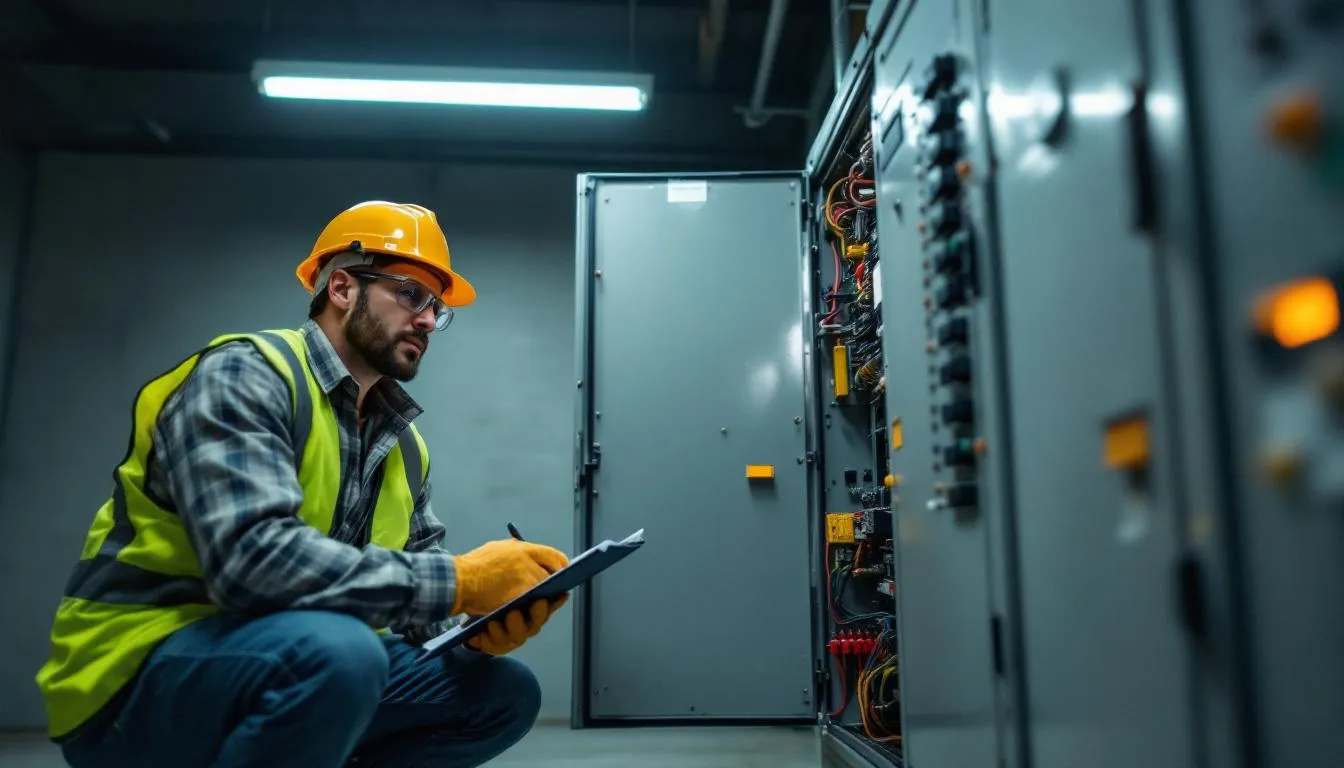
Odors are another idea. That sweet, acrid whiff of warmed plastic is a caution. So is a faint sizzling sound that reoccurs. I as soon as traced an erratic smell to a breaker with a poor stab connection, arcing carefully at the bus bar. The breaker had not tripped yet because the heat was at the contact, not from an overload.
Discoloration around a breaker or on the metal cover near a particular slot narrates. Labels curling from heat, or a fragile, browned conductor insulation under a set screw, generally imply a poor connection rather than a simple overload. An electrician will pull that breaker, inspect the bus, and often move the circuit to a fresh position if the bus is damaged.
Do not double up conductors where they do not belong
A typical defect is two conductors under one breaker lug, typically called double tapping. Some breakers are listed for two conductors. A lot of are not. The problem is mechanical and electrical: one conductor can unwind over time and lose securing force, triggering heat and arcing. If you see 2 copper or aluminum wires under a single screw with no listed twin style, plan a correction.
The repair can be as basic as including a noted pigtail to an effectively sized wire port and feeding one conductor to the breaker. In a congested panel, a small subpanel or a breaker with approved tandem slots might be the best course. I would rather add a six-circuit subpanel than stuff 2 circuits into a breaker that was not designed for it.
Neutrals and premises are worthy of attention too. Each neutral must usually land under its own terminal on the neutral bar. Grounds can share terminals in some panels, however only if the bar labeling enables it and wire sizes match the listing. Careless terminations multiply small dangers into genuine heat.
Aluminum electrical wiring requires special care
If your home dates from the late 1960s into the 1970s, you might have aluminum branch-circuit circuitry. Aluminum broadens and contracts more than copper and types oxides that are not as conductive. That does not mean aluminum is naturally hazardous, but it must be ended properly.
Breakers and lugs should be ranked AL/CU, and anti-oxidant substance used where defined. The torque on those terminations matters. I have actually seen aluminum wires that felt secure to the touch but were under-torqued by half, showing darkening near the clamp. A torque screwdriver is not overkill here. If you are not equipped, this is a strong case for professional service.
Choose the best breaker for the job
Swapping a breaker is not almost matching amps. The type matters. Kitchens, bathrooms, laundry areas, garages, and outdoor outlets need GFCI protection. Numerous living areas now require AFCI or dual-function breakers. If a breaker is tripping on annoyance arcs from a treadmill or older vacuum, that can be irritating, however do not defeat it by setting up a basic breaker to silence the journeys. Address the underlying device or circuit.
Also, avoid oversizing to stop journeys. Changing a 15 amp breaker with a 20 amp system on the same 14 gauge wire is a fire hazard. The breaker safeguards the wire. If the circuit journeys under typical use, consider load management, a new dedicated circuit, or an upgrade of the conductors.
Keep the panel interior clean, dry, and intact
Dust is not just unsightly. Fine dust can soak up wetness and end up being somewhat conductive, leading to tracking courses across insulating surfaces. In garages and workshops, overspray and sawdust drift into panels through missing out on knockouts. Those open knockouts likewise welcome insects, which enjoy warm cavities. I have actually vacuumed a panel which contained a wasp nest and spider webs stretched across live parts. That was not an enjoyable morning.
If your panel has missing out on knockouts, set up noted snap-in plugs. If you see rust, find out where the moisture originates from. I have traced rust to roofing system leaks that ran along the service mast, and to condensation from uninsulated ductwork above the panel. Sealing and ventilation often do more for panel durability than any cleaning.
Never paint the interior of a panel. Overspray on bus bars or breakers compromises thermal performance and can conceal heat tension. If somebody struck the deadfront with a roller, clean the edges where labels are, but leave the live parts alone.
Map your capability and strategy ahead
A capacity of modern-day electronics, A/C, electric lorry chargers, and induction cooktops asks more of the service than a home from the 1970s was constructed to deliver. If your main panel is 100 amps and you are including a hot tub or a Level 2 EV battery charger, you are not just juggling breakers, you are juggling service load.
Load computation is not uncertainty. Specialists utilize need aspects to show that not all loads run at as soon as, however even with those assumptions, many older services come up short. I have actually seen property owners daisy chain subpanels off a 100 amp service up until there was no space left, like including power strips to an overworked outlet. If your main breaker journeys on hot nights when the air conditioning and oven are both on, that is a sign your service might be undersized.
Upgrading to a 200 amp service typically brings the panel as much as current requirements for grounding and rise defense. It also provides you breaker space to keep circuits tidy. The cost varies widely, influenced by utility coordination, meter place, grounding electrode installation, and local permits. Upgrades take planning, but the assurance is real.
Grounding and bonding are not optional
Many panel threats conceal in imperfect grounding and service panel upgrade bonding. The grounding electrode system provides lightning and fault present a low resistance course to earth. The bond between the neutral bar and the service enclosure is only allowed at one point, usually the main service disconnect. In subpanels, neutrals and premises need to be separated. I have actually discovered subpanels with the bonding screw installed, triggering parallel neutral courses that stimulate metal avenue and boxes under fault conditions.
If you have actually a separated garage with a subpanel, the setup gets more nuanced. The existing standard is a devices grounding conductor run with the feeder and a separated neutral in the subpanel, with no separate ground rod used as a substitute for that conductor. Old installs often split neutrals and premises without a dedicated grounding conductor, counting on a ground rod at the removed structure. That approach can leave a neutral course through soil, which is not reliable. This is a point where an expert evaluation deserves the call.
Replace what is used, not just what fails
Breakers are mechanical gadgets. Springs fatigue, locks wear, thermal elements change qualities. They are checked to journey within a variety, and after years of service and heat, that range drifts. If a breaker handle is loose, does not lock crisply, or wobbles in the panel, change it with the specific listed model. Do not mix brands or use "fits most" breakers. Even when a third-party breaker appears to clip into the bus, it may not make the best contact pressure or align with the stab. Heat damage from bad fit appears years later.
If a breaker has actually tripped sometimes, particularly under short-circuit conditions, it has actually made retirement. Motors that stall, such as a struggling well pump or a bound furnace blower, can slam a breaker hard. I once determined a breaker that passed current but failed to journey at 200 percent after a number of motor fault events. It looked perfect. Only screening revealed the problem.
Know the safe property owner tasks
There is plenty you can do safely around an electrical panel without opening it up.
- Keep the location clear and dry, keep a legible circuit directory site, and guarantee you can reach the panel rapidly at night with great lighting. Exercise breakers a couple of times a year by changing them totally off then on, other than for delicate equipment circuits. This helps keep contacts clean and exposes sticky mechanisms. Use a plug-in tester to check GFCI-protected circuits and test GFCI/AFCI breakers with their test buttons month-to-month. If a device stops working to trip, schedule service. Note any repeating trips and the conditions. A brief log helps your electrical expert diagnose. Inspect for rust, smells, or buzzing. If you see deterioration or heat signs, stop there and call a pro.
That list covers most of the property owner's share of panel care. Anything beyond that crosses into live equipment or torque-sensitive work that needs tools and training.
Avoid typical myths and dangerous shortcuts
A handful of bad concepts flow in garages and online forums. Neutral is not a spare ground, and ground is not a spare neutral. They serve various purposes. Bootleg premises where a jumper bonds neutral to the ground screw in an outlet box develop shock threats and fool testers into checking out a safe ground where none exists.
Cheater merges existed for a reason in the period of screw-in fuse panels, however in a breaker panel, a gadget that defeats journey functions is not creative. Also, wedging a breaker handle to stop it from tripping solves nothing. If a freezer keeps tripping the garage GFCI, find the cause or replace the freezer. Modern GFCI devices are more resistant to problem journeys than older versions, and transferring the device to a dedicated circuit frequently fixes the frustration.
Tandem breakers are another misunderstood product. Some panels are noted for tandem breakers in specific slots only. Those slots are generally marked on the label diagram. Filling every slot with tandems to double your circuits is not safe if the panel is not developed for that configuration. Heat constructs where the bus density is greatest, and conductor fill ends up being chaotic.
Surge defense and lightning realities
Whole-home surge protective gadgets have grown and are now fairly priced compared to the value of modern-day electronic devices. Installed at the electrical panel, they secure voltage spikes that come from energy switching, remote lightning strikes, and large motor loads biking on and off. They are not magic. A direct strike will still overwhelm most gadgets, however an excellent SPD can keep a spike from securing your fridge control board and heating and cooling inverter.
Look for a gadget noted for Type 1 or Type 2 installation, sized for your service, with a clear status indication. Change it when it reveals defense has been depleted. Pair it with point-of-use protection for sensitive devices, and keep your grounding electrode system in good shape, given that SPDs rely on it to dispose energy safely.
The EV battery charger and heatpump era
Electrification is not abstract anymore. A Level 2 EV battery charger draws 16 to 48 amps for hours. A modern heatpump can be effective however might still be a big constant load. Include induction cooking and a heatpump hot water heater, and your panel becomes a hectic place.
Plan these upgrades together. A load computation might reveal that a 200 amp service is the right base. Smart load management systems can help avoid a service upgrade by shedding a hot water heater or delaying a car charge when the oven and clothes dryer are on, but that is only safe when crafted properly. I have actually set up load management that worked beautifully and seen do it yourself relays that failed in a manner that left a circuit hot when it should have been off. Pick listed, supported systems, and keep wiring clean and identified so future you or a specialist can service it.
When to call a professional immediately
Some scenarios call for speed, not dispute. If you smell burning insulation at the panel, see smoke, or feel the panel faceplate hot enough that you can not keep your hand on it, call your energy and a licensed electrical expert. If a breaker trips back on and instantly trips again with a pop, leave it off and call. Water entry into the panel, whether from a roof leak or a flooded basement, means the panel requires drying, assessment, and often replacement of impacted elements. Deterioration on live parts is not something you clean away and forget.
Repeated annoyance trips on GFCI or AFCI devices may be informing you about an electrical wiring fault, a scrubby cord, or a device with insulation leakage. Do not switch gadgets blindly. File what you observe and let a professional test the circuit. A megohmmeter and a clamp meter inform a fuller story than guesswork.
A quick word on licenses and inspections
Adding circuits, replacing panels, or upgrading service typically needs a license. Evaluations are not an annoyance; they are a 2nd set of qualified eyes. I have actually had inspectors catch things I missed on a long day, and I have actually captured items others missed. That cooperation keeps areas safer. If your specialist waves off authorizations as unneeded, find one who will work with your jurisdiction's process.
What a healthy panel looks and feels like
A well-kept electrical panel is boring, and that is a compliment. The door swings easily, the legend is legible, and the breakers line up with company handles. No empty knockout holes are open, no indications of water staining appear inside, and the cable television entries at the top or bottom are held by noted ports. The neutral and ground bars are tidy, with conductors cut to length and tightened to spec. The primary lugs are clean, without any white, green, or black fuzz suggesting corrosion or heat. With the door closed, the panel runs barely above room temperature except during long, heavy loads, and even then it is warm, not hot.
The outcome is not simply compliance, it is confidence. You can leave town knowing the freezer will remain on, the sump pump will run when the storm hits, and the breakers will protect the electrical wiring if something goes wrong.
Final guidance for everyday safety
Most electrical panel security boils down to a couple of practices and options. Respect the limits of what must be DIY. Keep the area clear, the labels accurate, and your eyes and nose alert. Do not normalize repeating trips or small odors. Upgrade aging equipment before it becomes an issue, especially if you are including heavy loads like EV charging or new a/c. Use the ideal protective gadgets for the space, even if they cost a bit more, and avoid shortcuts that trade short-term convenience for long-lasting risk.
The electrical panel sits silently on the wall, but it is dynamic, reacting to every appliance you switch on and every light you dim. Treat it like what it is: an accuracy gadget that is worthy of attention, not fear. With reasonable care and timely aid from a certified electrical expert, it will secure your home day after day without drama.